Most people own at least one of these. A tablecloth folded in a drawer from the last holiday. A table runner picked up at a home goods store because it looked good in the display. A set of placemats doing daily duty under plates and glasses.
What fewer people know is exactly when each one belongs on the table, how to combine them without the result looking overdone, and how to clean them without ruining the fabric.
This guide covers all three, starting with purpose and sizing, moving through layering, and ending with care by material. Read it straight through or jump to the section you actually need.
A tablecloth does one thing that nothing else on this list does. It covers the entire table surface and sets the visual register of the setting before a single dish or glass arrives. For holiday dining, formal celebrations, and event tables, a tablecloth is the default for good reason. It signals intention, protects the table from heat and moisture, and creates a unified backdrop that makes everything placed on top look more considered. For casual everyday meals, it is often more than the moment requires.
The drop is the length of fabric that hangs over each edge of the table. Getting it right is one of the details that separates a polished setting from one that looks accidental.
| Setting | Recommended Drop | Why It Works |
|---|---|---|
| Casual seated dining | 6 to 8 inches | Practical and comfortable; prevents excess fabric from interfering with guests |
| Formal seated dining | 10 to 12 inches | Refined and classic without appearing excessive |
| Buffet or display table | Floor-length (30 to 34 inches) | Conceals table legs for a seamless, polished presentation |
| Setting | Recommended Drop | Why It Works |
|---|---|---|
| Casual seated dining | 6 to 8 inches | Practical and comfortable; prevents excess fabric from interfering with guests |
| Formal seated dining | 10 to 12 inches | Refined and classic without appearing excessive |
| Buffet or display table | Floor-length (30 to 34 inches) | Conceals table legs for a seamless, polished presentation |
For rectangular tables, measure the length and width, then add twice your desired drop to each dimension. A table that is sixty inches long and thirty-six inches wide with a ten-inch drop needs an eighty-by-fifty-six-inch tablecloth. Round tables follow the same logic: add twice the drop to the diameter. Oval tables use the same calculation applied to the longest and widest points.
If the table surface itself is a feature worth showing, a runner on a bare table may serve the setting better than covering it entirely.
purpose is accent rather than coverage. It frames what sits on it, adds a layer of color or texture, and creates a visual spine down the middle of the table without committing to a full tablecloth beneath it.
On a casual, outdoor, or rustic table, a runner alone is often the right call. It adds something without overdressing the setting. The natural wood grain or worn surface of the table stays visible and contributes to the look rather than being hidden beneath linen. For a weekend brunch, a garden party, or a farmhouse-style dining room, a runner on a bare table tends to feel more at ease than a full tablecloth.
For this to work, the table surface needs to be in good condition. A runner draws the eye to what surrounds it. If the table is heavily scratched or stained, the runner will frame those flaws rather than distract from them.
When a runner is layered over a tablecloth, it introduces a second layer of color, texture, or pattern. The tablecloth provides full coverage and a neutral base. The runner provides the accent and the focal point.
For this combination to work, the runner needs to contrast with the tablecloth in at least one way, whether that is color, texture, or pattern scale. A white linen runner on a white linen tablecloth disappears. A nubby jute runner on a smooth cotton tablecloth creates exactly the kind of contrast that makes layering feel intentional. The runner should hang six to eight inches over each end of the table when laid lengthwise.
Placemats exist to solve a problem that tablecloths and runners do not. They protect the immediate area where a person eats without committing the entire table to a dressed look. For daily meals, they are faster to set up, easier to clean, and less likely to carry the accumulated evidence of a week of dinners.
| Material | Best For | Care Notes |
|---|---|---|
| Woven fabric | Everyday dining, casual meals | Machine washable; refer to care label |
| Vinyl or PVC | Children's tables, outdoor use | Wipe clean or rinse; very low maintenance |
| Linen or cotton | Casual entertaining, brunch settings | Machine or hand wash cold; may wrinkle |
| Jute or natural fiber | Rustic or relaxed settings | Spot clean only; not water-safe |
| Cork | Modern, minimalist tables | Wipe with a damp cloth; avoid soaking |
For everyday meals at a table worth showing off, placemats on a bare table are often the better choice. They protect the surface where it matters, leave the rest of the table visible, and avoid the formal commitment of a tablecloth. On a dining table with a surface you like looking at, this is the setting you use every day without it feeling like an occasion.
Layering a tablecloth, a runner, and placemats is a legitimate approach for event tables, holiday settings, and formal dinner parties. It is also easy to get wrong. When each layer competes for attention, the table stops looking styled and starts looking cluttered. The goal is a hierarchy: each layer should support the one above it rather than fight it.
The runner should be twelve to sixteen inches narrower than the table width. On a thirty-six-inch-wide table, a runner between twenty and twenty-four inches wide sits correctly. Anything wider starts to look like a second tablecloth. Anything narrower starts to look like a ribbon.
Placemats should sit at the edges of the table, one per place setting, with the inner edge clear of the runner. They should not overlap the runner. When a placemat slides under the runner, the layering loses its definition, and the whole arrangement reads as one flat surface rather than three distinct elements.
The most reliable layering approach uses a neutral tablecloth as the base, a runner that introduces either a stronger color or a contrasting texture, and placemats that either echo the tablecloth or pick up a secondary color from the runner. Three competing patterns at three different scales create visual noise. One pattern, supported by two solids or textures, tends to hold together.
Texture mixing matters as much as color. A smooth tablecloth under a woven runner under a rattan placemat creates depth through material contrast, even when the color palette is entirely neutral. That layering of textures is what makes a table setting feel considered rather than assembled.
The most important decision in tablecloth care happens in the first sixty seconds after a spill. Blotting rather than rubbing, and getting the fabric into a soak or wash before the stain sets, determines whether the cloth comes back clean or carries a ghost of every dinner it has been through. Waiting until the next morning significantly reduces the odds of full removal.
| Fabric | Home Washable? | Water Temp | When to Go Professional |
|---|---|---|---|
| Cotton | Yes | Warm, not hot | Heavy stains, heirloom pieces |
| Linen | Yes, with care | Cold to lukewarm | Embroidered or antique linen |
| Polyester | Yes | Warm | Rarely necessary |
| Silk or silk blend | Hand wash at most | Cold only | Strongly recommended |
Cotton tablecloths are the most forgiving. Most can be machine-washed in cold or warm water on a regular or gentle cycle. Treat stains with a pre-soak or targeted stain remover before washing. High heat will set any stains that survived the wash, so check before drying.
Linen is more demanding. It can be machine-washed, but on a gentle cycle in cool water. Linen wrinkles aggressively and should be removed while still slightly damp, then hung flat or ironed while damp. For heirloom or antique linen, professional cleaning is the safer choice.
Silk tablecloths and silk-blend fabrics should not go into a washing machine. Water marks silk easily, and the agitation of a wash cycle can distort the weave and permanently damage the surface sheen. Dry cleaning is the correct approach for any tablecloth with significant silk content.
A plain cotton or linen runner is straightforward to care for. Machine wash on gentle, treat stains before the cycle, reshape while damp. The moment embellishment enters the picture, the calculation changes completely.
Embroidered linen and cotton runners can often be hand-washed carefully in cool water with a mild detergent. The concern is the embroidery thread itself, which can bleed, distort, or pull under agitation. If the embroidery is dense or covers significant portions of the runner, machine washing risks snagging threads or pulling stitching loose. For runners with embroidery you value, professional cleaning removes that risk entirely.
These should not go into a washing machine under any circumstances. Beads are often strung on thread that weakens in water. Sequins can curl, lose their backing finish, or transfer color onto the base fabric when wet. Metallic thread, common in formal and holiday runners, can oxidize or tarnish with washing and may not recover its original sheen afterward.
Spot cleaning with a damp cloth and mild soap is the maximum home care appropriate for these materials. For anything beyond a surface wipe, a professional cleaner who handles decorative textiles is the right call. The cleaning cost is a fraction of replacing a runner, which requires significant embellishment work.
Fringe tangles in a washing machine drum and can emerge knotted beyond easy repair. Hand washing with the fringe laid flat and rinsed carefully is the only home method worth attempting. After washing, gently comb the fringe with a wide-tooth comb while still damp, then lay the runner flat to dry.
Placemat care is the most straightforward of the three because the material usually makes the answer obvious.
Wipe down with a damp cloth after each meal. For stuck-on food or grease, a small amount of dish soap on a damp cloth handles it. These materials do not go in the washing machine. Heat and agitation can warp vinyl and cause silicone to deform at the edges. The care routine is: wipe, rinse, air dry.
Check the care label first. Most fabric placemats are machine-washable on a gentle or normal cycle in cool or warm water. Treat any stains before washing. Placemats with decorative stitching, applique, or trim should be washed on gentle and checked after the first wash to confirm the embellishment survived.
These cannot go in water without damage. Cork warps when soaked. Rattan and woven natural fiber placemats lose their shape when wet and may never fully recover it. Spot clean only, using a barely damp cloth and blotting rather than rubbing. Deep staining on cork or rattan placemats is generally permanent.
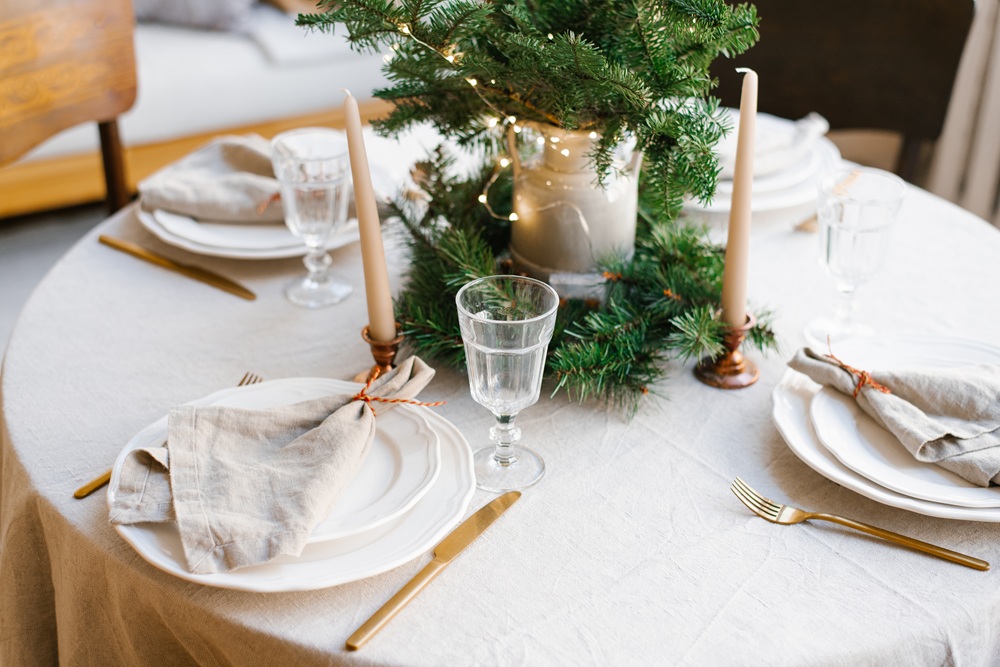
Linen tablecloths, embroidered runners, and formal table linens all have a point at which home care is the wrong call. The fabric is too delicate, the embellishment too involved, or the piece too valuable to risk in a washing machine.
Fashion Cleaners offers professional cleaning tailored to delicate fabrics, structured pieces, and intricately detailed linens, ensuring each item is returned fresh, pressed, and ready for use. We handle all categories of table linens with the care each fabric requires, from everyday cotton to heirloom linen to heavily embellished event runners.
For a limited time, enjoy 15% off professional cleaning on all table linens, including tablecloths, runners, placemats, and napkins. Contact Fashion Cleaners or schedule your service online.
Online Scheduling: fashioncleaners.com
Location: 3031 Leavenworth St., Omaha, 68105
Phone: 402-342-3491
