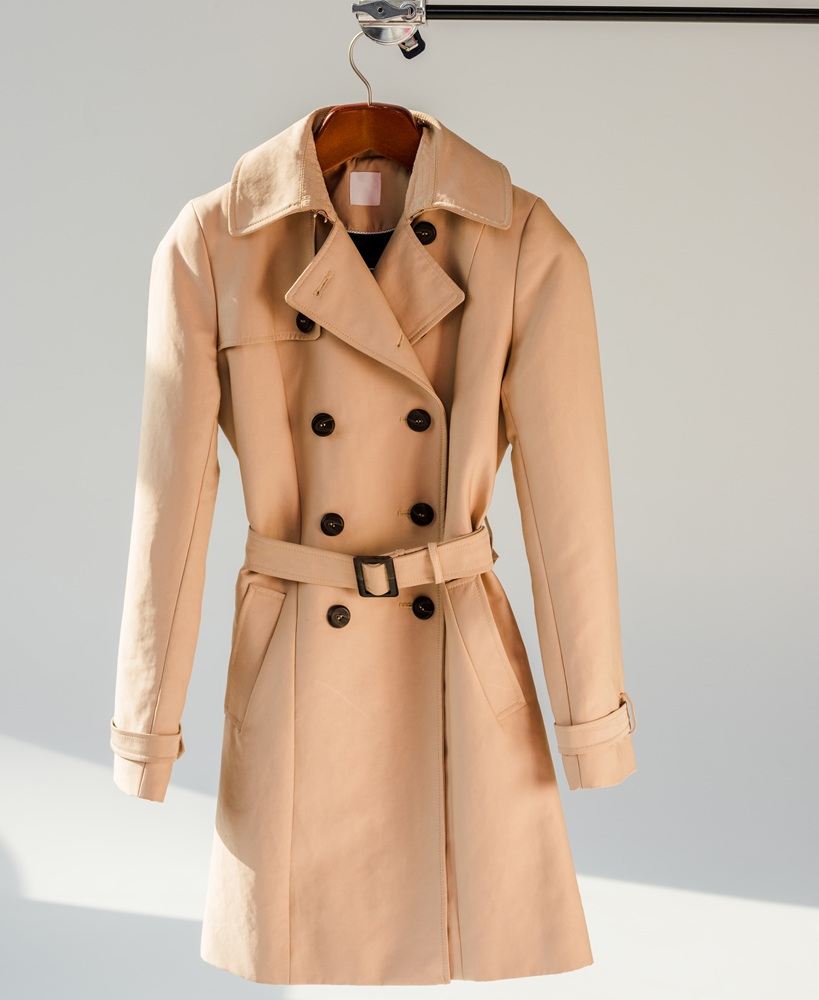
Every spring, the same thing happens. The weather turns, you stop reaching for your heavy coats, and at some point, you fold them into a closet, drop them in a bin, or stuff them into a vacuum bag and don't think about them again until October.
Then October comes, and something's wrong. A yellow ring on the collar. A musty smell that won't air out. A lining that's starting to separate near the hem. You don't remember spilling anything. You don't remember anything happening at all. It happened in storage. And it was preventable.
If you're searching for how to store winter coats in summer and actually have them come back out in good shape, this is the post worth reading before you put anything away. For Fashion Cleaners customers in Omaha, there's also a limited offer at the end that makes this easier than it's ever been.
Most people assume a clean coat in a garment bag is a safe coat. It’s not. Three things quietly work against your coats the entire time they’re stored, and none of them require any help from you.
Most home closets warm up over summer, and attics and garages get much worse. That sustained heat causes yellowing on light colored shells and ivory linings. It weakens adhesives in bonded and fused fabrics, which is how structured blazers and some pea coats hold their shape. Over enough time, you’ll see bubbling or delamination, where the lining starts to separate from the outer layer entirely. You won’t notice any of this in May. You’ll notice it in September, right when you want to wear the coat again.
Wool and down are especially vulnerable. When these materials sit in a space that fluctuates between damp summer air and whatever your closet passes off as ventilation, mildew and mold develop inside the fabric. Not on it. Inside it. Down loses its loft from staying compressed in humid conditions. That parka that felt like a cloud last winter may not perform the same way in January.
They’re drawn to natural protein fibers: wool, cashmere, down. A coat sitting undisturbed in a dark closet is exactly what they’re looking for. And the damage happens invisibly. By the time you notice a hole or a thinning patch, the larvae have been feeding for months.
None of this is unusual or bad luck. It's a predictable result of standard home storage conditions.
A professional seasonal garment storage service doesn't just hold your coats. It holds them in conditions that eliminate what causes damage in the first place. Here's exactly how it works against each threat.
The result: you pick up your coats in October, and they’re in exactly the condition you left them in May. No smell, no spots, no surprises.
A coat that looks clean after a full winter of wear is almost never actually clean. Body oils, perspiration, and food residue absorb into fabric in ways that are not visible right away. They are sitting there. And over five to six months of storage, they do real damage.
Residues oxidize over summer heat. Yellow staining appears at the collar and cuffs. Moths are more attracted to soiled fabric. By October, some damage is irreversible.
Residues are removed before they oxidize. Moths have nothing to attract them. Your coat comes out in October in the same condition it went in during May.
Not every storage offering is the same. Before you hand over your good coats, here’s what to ask.
There’s a huge difference between a dry cleaner that keeps garments in a back room and one with a properly regulated storage facility. Ask directly about temperature and humidity management. If the answer is vague, keep looking.
You want individual hanging, not bulk bins or shelves. Coats should hang with space around them, not be folded, rolled, or compressed. Structure breaks down over months of compression, and that’s damage you can’t undo with pressing.
Moth prevention should be included as standard practice. If it’s not mentioned, ask. For wool and cashmere, this is nonnegotiable.
You want your coats back quickly when fall arrives, not a two week delay or a complicated pickup process. And ask about insurance or liability coverage. A professional service stands behind what’s in their care, and you should know what happens if something goes wrong.
In Omaha, summer humidity is real, and attic temperatures regularly push well past 100 degrees. The gap between home storage and professional storage isn’t theoretical here. It’s the difference between coats that last and coats that gradually fall apart in ways that seem mysterious until you understand what was happening the whole time.
Getting your coats and jackets dry cleaned by a service that also offers proper storage means you’re solving the whole problem at once, not just half of it.
Bring your coats to Fashion Cleaners before summer starts. We’ll professionally clean them, store them in our climate-controlled facility, and have them ready for you when fall arrives. No heat damage, no moths, no musty surprises in October.
Reserve your spot before our storage fills up. Contact Fashion Cleaners today.
📍 Location: Loveland Centre - 2501 South 90th Street Suite 122, Omaha, NE 68124
📞 Phone: 402-504-4160 | 402-242-5869
🕒 Hours: Mon–Fri: 10 AM – 6 PM | Sat–Sun: Closed